

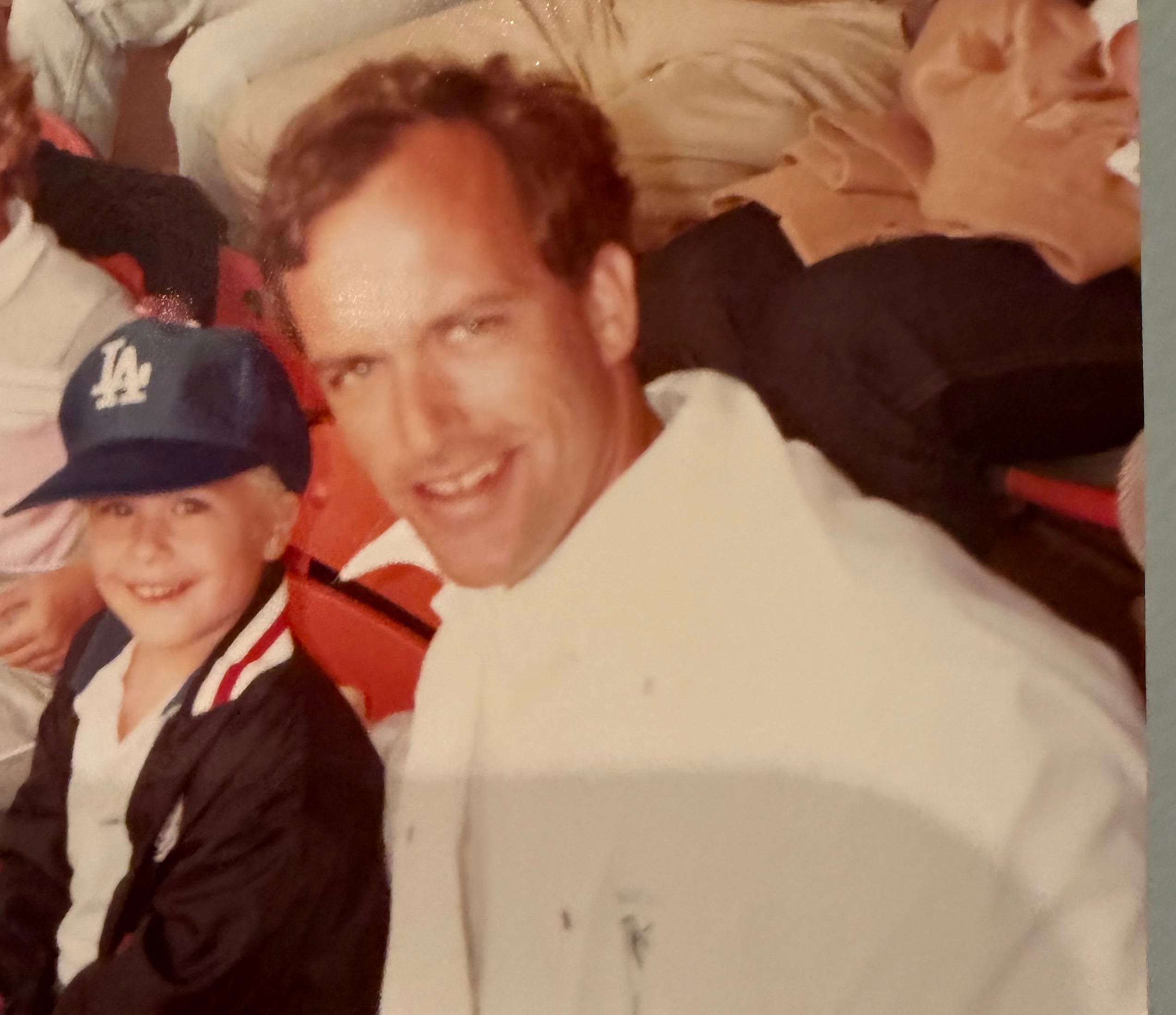
My dad never liked the idea of Take Your Kid to Work Day.
It wasn’t that he didn’t like me, it was the blending of his two spheres of influence that bothered him. He would never think to invite a mechanical engineer to come play catch in our backyard. Why should he invite his son to come hear about fluid dynamics at work? No, his boundaries were clear. When Dad was home, he was home. And when Dad was at work, he was at work.
For many years this worked quite well for everyone. But as he climbed the ranks at WingTech, a middling aerospace company in Huntsville, the balance between family and career shifted, and what used to be quality time together grew more scarce.
Until that point, we had a standing weekly Guys’ Night Out at the family-owned Chinese restaurant a half-mile from our house. Our deal was that we had to walk there, whether it was 35 degrees with sleet or 95 degrees with our sweaty shirts stuck to our skin by the time we arrived. We covered all the important topics. Baseball. Football. Reptiles. And at the end of the meal, no matter how full I was from noodles and rice, I had to order the green tea ice cream.
I imagine there was a store somewhere in Alabama where green tea ice cream could be bought but I never saw it. To me it was a magic concoction that only existed at the China Palace off Old Madison Pike.
But starting at age nine, those weekly guys’ nights became monthly. Within a year they had stopped altogether. And so when my 5th grade teacher mentioned that the following Thursday was national Take Your Kid to Work Day and we could miss school if we could convince a parent to bring us along, I didn’t hesitate to take action.
“Next Thursday?” my dad asked. He squinted his eyes and gritted his teeth like he was about to have an arrow pulled from his thigh. “I think I might have a meeting.”
As she often did, my warrior mom rushed to my defense. “You have meetings every day,” she said.
If he had more time to prepare he would have been ready with good reasons why this simply would not fly, but by design my dad had been caught flat-footed with the news and could not mount a worthy defense.
The following Thursday I bounded into the front seat of his grey sedan and we drove to Research Park, the six-square mile area north of the Army’s Redstone Arsenal which was populated almost exclusively by aerospace companies. Each company’s building was unique in design but devoid of character, as if adding too much flair to their headquarters might give away valuable secrets about what was going on inside.
“What do they do over there?” I asked as we drove.
“Lasers,” my dad said.
“What about that one?”
“Communications.”
“What about that one?”
“Space suits.”
I finally just started pointing like a conductor. My dad kept answering.
“Flight controls”... “radar”... “mirrors”... “ejector seats.”
We arrived at WingTech, a dark rectangular three-story building that resembled a giant brown Lego. Unlike the other companies, I already knew my dad’s company made fuselages for military aircraft. Lining the office hallways were photos of them. In a hanger. In the air. Flying upside-down. Refueling at 40,000 feet. Firing a missile. Dropping a bomb. Landing on an aircraft carrier. This was already more exciting than whatever dumb thing I would have been doing at school.
We made our way to his office. This is where the excitement came to an abrupt halt. My dad’s office had even less character than the outside of the WingTech building. He literally had nothing on the wall. Just beige paint that closed in around me as I spun. His desk was equally sparse, showcasing a computer monitor and a mouse pad and a single black pen.
“You only have one pen?”
“I can only write with one hand,” he quipped.
“What happens if it runs out of ink?”
“Then I go to the supply room and get a new one.”
The supply room offered some promise of stimulation. “Can we go there?” I hoped.
“No.”
“Can I see other people’s offices?”
“No.”
“Is there a kitchen?”
“There’s a kitchenette.”
“What’s a kitchenette?”
“Like a kitchen. But not.”
Everything at WingTech felt like something “but not.” It was a building but had no character. Containing offices that had no life. Employing dads who had no joy.
Worst of all, I had reached this conclusion and it was only 8:07am. I found myself wondering what my friends at school were doing. I bet they were doing math facts. I hated math facts. But not today. Today math facts sounded downright thrilling. 6 x 5 is 30… 6 x 6 is 36… 6 x 7 is—
“Hey Williams,” a bald head popped into my dad’s depressing domain. “They’re asking for you in the conference room. The general showed up early.”
The general?! Okay, NOW we are talking. Take that, 6 x 8 and 6 x 9! I leapt from my seat and grabbed my dad’s black pen, figuring he would need it and this would give me an opportunity to prove myself valuable in a crisis.
But I didn’t even get to the door before he turned around and blocked my forward progress. “I’m sorry, C.J. You don’t have the security clearance to attend this meeting.”
This time I was the one caught flat-footed. “But… it’s Take Your Kid to Work Day. How can your kid know what you do for work if I can’t actually see you do it?”
“I wish I could. But if I bring you in there, I’ll lose my clearance and if I lose that then I lose my job. I’ll be back before lunch.”
“Well what the heck am I supposed to do until then? I came here wanting to see planes and you don’t even have a picture of one on your wall? Why couldn’t you at least put one on your wall?”
From down the hall came a voice. “It’s starting!”
Feeling the pressure, my dad walked to his desk, opened a drawer and pulled out a ream of white 8 ½ by 11. “Right now your best chance to see a plane is to make one out of paper.” Then he dropped the 500 sheets on his desk with a thud and disappeared down the hall.
At first I resisted. If I wanted to make paper airplanes, I could have done that at school with a stupid worksheet. And even if I made one, where could I even throw it? His office was no more than ten feet long. That brief flight would be about as satisfying as the time a doctor had to use a fancy pair of clippers to free an ingrown toenail from my foot.
But as the clock ticked by and my dad remained MIA, I finally relented. It was quality paper at least. And if you held it up to the light you could see the WingTech logo embossed in it.
Fine, I told myself. But just one.
Of course once you start doing something where time is of no concern, you really can’t make just one of anything. Because you start appreciating the imperfections of your first attempt and recognize that you could probably improve on it. And then you move past improvement toward perfection. That crisp fold. The ideal wing shape. The right amount of nose tilt.
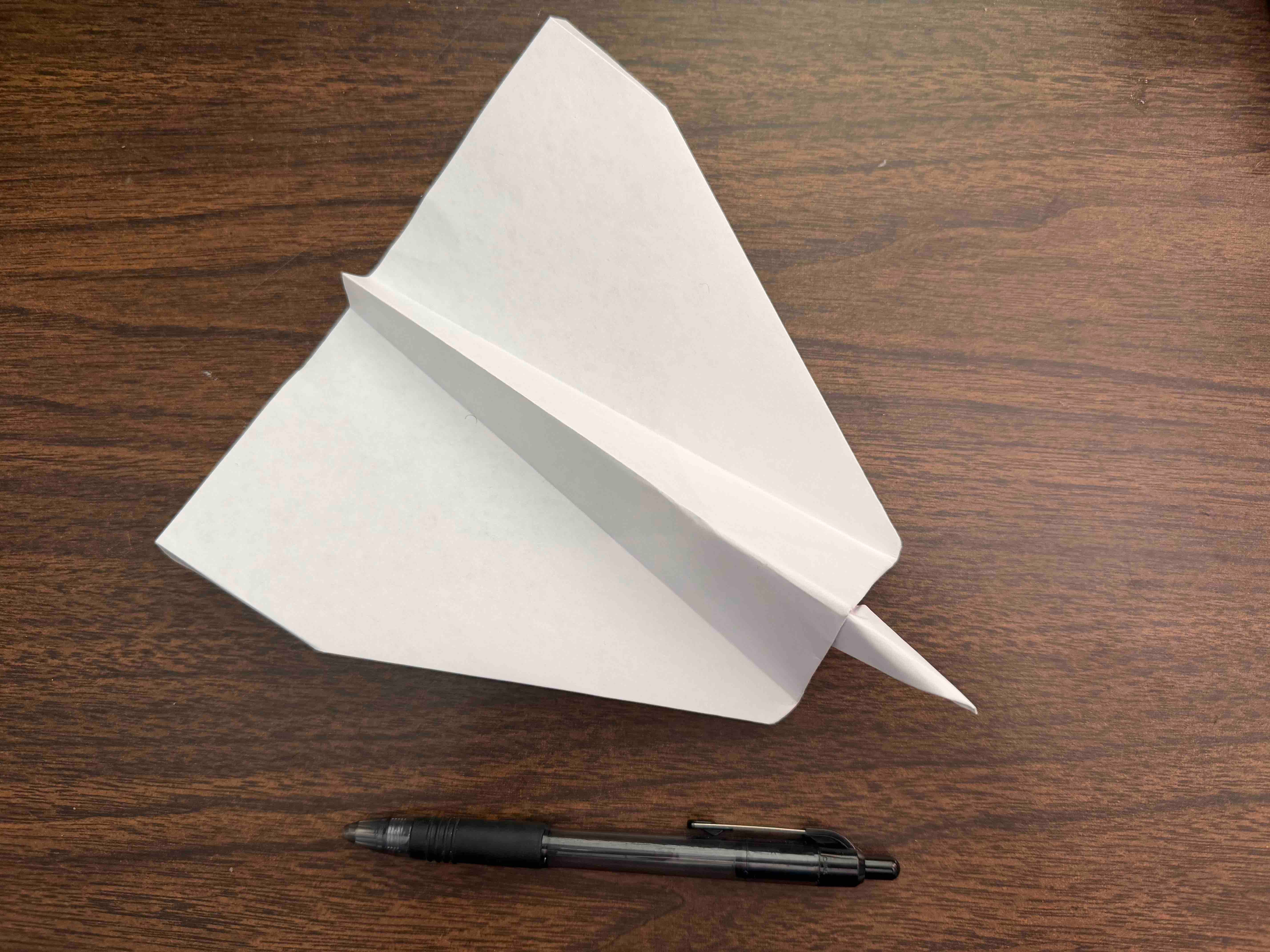
This went on for a good hour, maybe two. (There was also no clock in my dad’s office.) But finally I had created a plane that seemed worthy of my effort. And it was ready for its maiden flight. But I needed a longer runway.
I tiptoed into the silent hallway. It was at least eighty feet before it opened into the main lobby. I double checked the wings to make sure they were balanced and gave the main fold one last pinch between my thumb and middle finger. Then I pulled my hand straight back behind my ear and let it go.
It flew on a crisp line without wavering. I expected it to go twenty feet, but at thirty it was still cruising, lifted in part by an updraft from the high-powered Alabama air conditioning. I smiled in wonder as I watched it fly farther and farther, proud of my creation and wishing my dad could see it… which was when the general with the thinning grey flat top on his head and the four gold stars on his shoulders turned the corner and took the pointy nose of my airplane right between the eyes.
“Ow! What the—”
The plane fell to the ground as WingTech’s top executives rushed to check on their VIP.
“Is everything okay, general?”
“I’m fine. Just a little… friendly fire,” he said, bending down to pick up the plane which had come to rest on top of his shiny black dress shoes.
My father pulled up the rear and was horrified to see me at the end of the hall and my paper airplane in the hands of one of the most powerful men in the American military.
“You made this?” the general called out.
“Yes sir,” I answered.
The general gave it a satisfied look before sending it back to me with one smooth glide.



My dad didn’t speak the entire ride home.
I held the airplane in my hands, its fuselage starting to break down from all the sweat in my nervous hands.
We pulled into the driveway and he turned off the engine, but my dad didn’t get out. He stared straight ahead. After ten seconds of silence, “Well that was the worst day of my entire career,” he said, then he flung the door open and slammed it shut, leaving me alone.
On Friday, I returned to school and my dad called in sick. My mom kept him hydrated with soup and crackers, not aware of what was obvious to me: he wasn’t sick at all. He just couldn’t bring himself to face his boss for the embarrassment I had caused.
Likewise, I delayed my return home from school, finding a variety of interesting things in the gutter on the walk home to postpone my eventual arrival. It was almost four-fifteen when I finally landed at my front door. But I was still on the porch when the black SUV pulled up in front of the house.
An Army private opened the side door and out stepped the general. Even from the curb, I could see a small red scab on the bridge of his nose. I felt nauseous.
“Afternoon, son.” He extended his hand for a shake while still an awkward distance away. Hoping to mend our relationship, I held mine out as well, like two magnets slowly being drawn closer until—SMACK—his meaty paw engulfed my eleven-year-old grip.
“General Jack Gufrey,” he said.
“C.J. Williams,” I said, shaking back but not moving his arm in the slightest, like a salmon caught in the mouth of a grizzly bear.
“Is your father home?” he asked.
“Yes, but he’s… sick,” I said. It was a lie borne out of misplaced devotion.
“Well I survived mustard gas in Iraq. I can handle some sniffles.” Then he let himself into our house like he owned the place—and based on how much of my dad’s salary came from military contracts, perhaps he did.
Now my dad actually did look sick. He sat on the couch, pale, with a noticeable shiver. He went to take a sip of hot tea that my mom had brought him and could barely get the mug to his lips.
I stood with my back against the living room slider, my hand on the handle, ready to go AWOL at the first mention of military police or court martial or treason.
“As you know, there was an incident at WingTech yesterday,” the general began. “Involving your son C.J.”
My dad mouthed the words “yes, sir” but no sound came out.
“What you don’t know is that at my direction the Army’s top minds have been trying to recreate that paper airplane for the last twenty-nine hours.”
My father opened his mouth again and this time was able to eke out a quiet, “They have?”
“Hell yes and damned if I couldn’t quite describe it to them,” General Gufrey said. “We probably went through four or five reams of the best military-grade paper I could find.”
The general turned in the leather recliner till he could see me by the back door. “That creation was one in a million, son.”
I watched as my dad straightened up. Color returning to his face. A modern day Lazarus.
I took a cautious step away from the door. “Thank you.”
“Is there a chance you still have that airplane? Because I would really love to see it.”
Without answering, I sprinted past General Gufrey and into my room. In all the pain and shame of the day before, I couldn’t remember what I’d done with it. I tore through my bed and bookshelf and finally found it under a pile of dirty clothes. The left wing was a little crumpled but the overall design was still intact.
I turned to run back only to find my mom filling the doorway. Her legs were splayed and her hands braced the door jamb, her body making a pear-shaped X that left no space for me to wiggle past.
“Do not show him that airplane,” she said. “Not for free.”
For the next twenty minutes, my dad stayed silent as General Gufrey and my mom went back and forth on negotiations while the plane and I remained sequestered in my room. I thought $300 would be fair and with it I could upgrade my bike and my sneakers. When the dust settled, the U.S. government agreed in writing to put $200,000 in a college fund.
“Okay, C.J.!” Mom yelled from the living room.
Finally understanding its true value, I brought out the airplane ceremoniously, walking slowly and holding it flat in my open palms like some offering to a god.
“There she is,” the general said when he saw me appear around the corner.
He lifted the plane off my hands and inspected it. “Yep. That was our problem,” he noted. “I remembered the wings being at a forty-five degree angle but they’re almost sixty. You see?” He held it out so my dad could appreciate my work.
“Might even be closer to sixty-five,” my dad calculated.
Having accomplished his mission, General Gufrey stood up from the recliner. “I gotta get this to the boys,” he said, then turned to face me one last time. “Now, son, everything we talked about here is top secret. Do you understand?”
I nodded. Then, feeling a degree of intimacy, saluted. The general saluted back, then drove off in his waiting SUV.

First thing Monday morning, my dad made a beeline to his boss’s office, assuming he and the other executives would find this as entertaining as he now did.
What do you mean your son ‘sold a bomber’ to the U.S. Army?” his boss glared.
Dad was now regretting the decision. “Well, um… you see…”
“And who are they contracting to do the actual design?”
My dad fumbled this response too. “Gufrey didn’t say… it’s something we can inquire about of course… I assumed the job would be put up for an open bid--”
“AN OPEN BID?! YOU HAD THE CHANCE TO NEGOTIATE WINGTECH’S EXCLUSIVE CONTROL OVER AMERICA’S NEXT GREAT WARPLANE AND YOU DIDN’T?!”
He did not.
Thus began a flurry of phone calls and meetings with WingTech legal counsel. They confirmed that anything my dad designed was automatically the company’s intellectual property, but anything I made? That was a stickier issue.
Around lunchtime I got pulled from school by my mom and driven back to Research Park. Unlike the last time I was there, everyone in the lobby was thrilled to see me, including my dad. The top executives led me through all sorts of exciting rooms that had previously been off limits before ushering me into a conference room that was filled with every existing and experimental model of airplane they could find in addition to a doughnut covered in rainbow sprinkles just for me.
“Have a seat, C.J.,” my dad said casually, though I couldn’t help but notice beads of sweat on his temple.
While I savored my doughnut, the company’s top lawyer had me recount everything I did during Take Your Kid to Work Day. He was hoping that my design was inspired by one of the planes I saw in the lobby, but I said my dad whisked me through there so fast I barely had time to appreciate them. Then he wondered if perhaps I had seen some stray designs left behind by an employee in the supply room.
“I wasn’t allowed to see the supply room,” I answered.
Then he asked if I was at least handed a plastic WingTech lanyard, thinking he could make the argument I was a de facto employee at the time of the plane’s creation.
“Didn’t get a lanyard.” The lawyer sighed. My dad hung his head. “The only thing he gave me was some fancy paper where you could see the WingTech logo if you held it up to the light.”
The lawyer shot my dad an energized look. “You gave Christopher our embossed paper?”
My dad nodded, uncertain if this was a breach of some company regulation. But the lawyer was beaming with delight. “Well that changes everything! That new bomber was designed using trademarked WingTech property!”
This was followed by a lot of hugs and high-fives and then someone brought me a second doughnut.
Thus my paper airplane was returned to WingTech along with a $300 million defense contract. At my mom’s request, they matched the Army’s college fund and threw in the new bike and sneakers I had hoped for.
Everyone was now happy. My mom. My dad. Apparently even the White House. WingTech was so excited they made my dad project manager and let him name the plane after me.
The CJ-11.
And thanks to all that, for the next two months I barely saw the man. My dad was gone before I woke up and didn’t come back until I was asleep. He even worked weekends. “It’s just a dumb airplane,” I told my mom over yet another quiet dinner with just the two of us.
“Dumb?” my mom rebutted. “The CJ-11 is a top priority. If your father does a good job, this could cement his career.”
“What if he does a bad job?” I asked.
My mom put down her fork. “Now why would you even ask a ridiculous question like that?”
I asked because I didn’t care about my dad’s career. Or his reputation. I didn’t care if he got a bonus. Or a bigger office. Or a closer parking spot. All in all he was better when he was insignificant. And I was better too.
(This was when various dramatic and dangerous and illegal things took place that I really can’t talk about.)
It was Father’s Day when my dad got the call. WingTech had given him the day off to spend with family and he was asleep on a chaise lounge. He roused himself and stumbled past me to the kitchen phone.
His boss’s voice came through the other end loud and clear: “Emergency meeting. Now.”
My dad changed out of his trunks and sped to the office. His boss waited in the conference room. There were no sprinkled doughnuts waiting for him.
“I just received a very unsettling call from General Gufrey,” his boss began.
“Oh?”
“Intelligence officials have uncovered evidence that China is developing a new plane with the exact same specifications as the CJ-11.”
“That’s impossible,” my dad answered.
“Is it?” his boss said. Then he slid a stack of pages across the table. It was a recent WingTech CJ-11 blueprint, its schematics broken down part by part. Under each one’s English description was a translation handwritten in Chinese characters.
“I don’t understand. How did they get this?”
“You tell me, Williams.”
“Obviously I have no idea.” He looked at his boss and understood what this meeting was really about. “Surely you don’t think I gave it to them. Do you?”
“Someone here did. You had all the files. Not that I expect you to confess. But eventually the FBI will find out the truth. Until then they have no choice but to pull everyone’s clearances. And our contracts.”
“Which ones?”
“All of them.”
“So… what are we supposed to do now?”
“Until further notice, consider yourself on unpaid leave.”
My dad returned home in a daze. He went out to the yard without a word and walked back and forth for an hour in a tight lawnmower-like grid, searching for answers and unable to find any. Deep in the ivy, an old Frisbee caught his eye. He pulled it out and threw it into the sky at a sharp angle, catching it when it returned like a boomerang.
Then he came back inside and found me on the couch. “How do you feel about a Guys’ Night Out?” he asked.
I showered and got dressed and my dad and I walked the half-mile down Old Madison Pike to our favorite restaurant. We talked about thunderstorms and baseball and what middle school was going to be like and how my great grandpa owned the first Ford dealership in Pittsburgh and the time my uncle got bit by a racoon and the day my dad met my mom.
It was the best night of my life.
When the bill came, my dad read it with his usual attention to detail and was surprised to notice a glaring oversight. “Whoops. Mr. Liu didn’t charge us for your dessert.”
He waved over the owner, a gentle man in his 60s and barely four feet tall. “I think you forgot to include my son’s green tea ice cream.”
Mr. Liu smiled. “Did not forget. Green tea ice cream is a gift. For our most loyal China Palace customer.” Then he bowed and walked away.
For a second I feared my dad would piece it all together. To me it seemed so obvious. Instead, he chuckled and shrugged and threw some cash on the table. “Well how nice is that?”




Good one! Thank you Bob X.
“He was better when he was insignificant. And I was better too.”
That sentence about insignificance is the whole story. Not the bomber contract, not the FBI, not the $200,000 college fund. The boy just wanted his dad back at the dinner table.